Lead Management Software in Nepal: How to Stop Losing Sales Opportunities
Discover how lead management software in Nepal helps businesses capture enquiries, assign follow-ups, improve conversions, and track every opportunity.
 Kritika Ghimire7 min read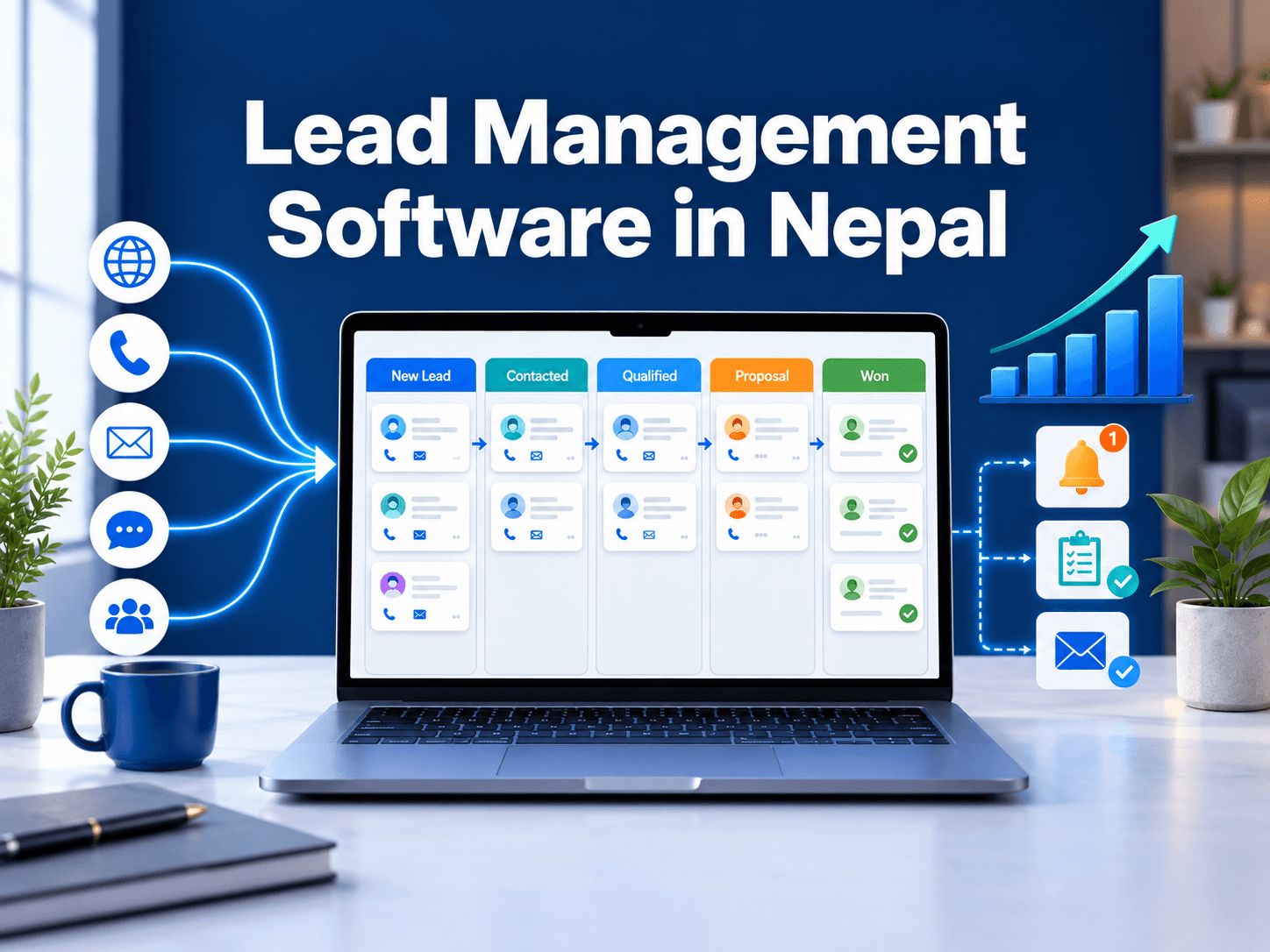
New leads can come from website inquiries, phone calls, Facebook, email, referrals, and walk-ins. If each of these is handled separately, sales opportunities can be lost.
A message might not get a response, two employees could be contacting the same person, or a qualified lead could get buried in a spreadsheet. Lead management software in Nepal gives businesses one place to capture, assign, follow, and review every enquiry. It helps sales teams respond consistently and gives managers a clear view of the pipeline. This article explains how lead management works, which features matter, and how Nepali businesses can implement it successfully.
What Is Lead Management Software?
Lead management software is a system that organizes potential customers from their first enquiry until they buy, decline, or become inactive. It records where the lead came from, what the person needs, who is responsible, what communication has happened, and which action should happen next.
Instead of using personal notebooks, phones, inboxes, or separate spreadsheets, the business creates one shared record. Authorized employees can view the history and continue the conversation.
- A sales lead management system often includes:
- Lead capture
- Automatic or manual assignment
- Sales stages
- Follow-up tasks and reminders
- Notes and communication history
- Lead source tracking
- Quotations or opportunity values
- Conversion and performance reports Every genuine enquiry should have an owner, status, and next action. This reduces missed opportunities as enquiry volume grows.
Why Nepali Businesses Lose Leads
Many businesses lose leads because follow-up is inconsistent. Enquiries arrive through several channels, but nobody has a complete view. Employees may assume someone replied, delay a callback, or forget to update a sheet. Common causes include:
- Website enquiries remain in one employee’s email.
- Social media messages are not added to the sales list.
- Leads are assigned verbally without a record.
- Follow-up dates depend on memory.
- Different salespeople keep separate customer files.
- Management cannot see how long leads remain unanswered.
- The business records closed sales but not lost opportunities.
- Reports count leads without showing their quality or source.
These gaps become more expensive as marketing grows. Businesses investing in a digital marketing company in Nepal also need a reliable follow-up process after enquiries arrive. Lead tracking software connects lead generation with sales execution so the business can see what happens after the first contact.
How a Lead Management System Works
The process begins when a lead arrives from a website, call, campaign, referral, manual entry, or integration. It is assigned by product, location, workload, or another rule.
The salesperson reviews the requirement, makes contact, records the discussion, and schedules the next action. The lead then moves through stages such as New, Contacted, Qualified, Proposal Sent, Won, or Lost. Businesses looking for a focused solution can explore LeadRack lead management software, which uses clear boards, stages, ownership, and next actions to prevent leads from being forgotten.
A simple workflow is:
- Capture the enquiry.
- Check and organize the information.
- Assign an owner.
- Contact and qualify the lead.
- Record notes and schedule the next step.
- Move the opportunity through the pipeline.
- Mark it as won or lost with a reason.
- Review conversion and source reports.
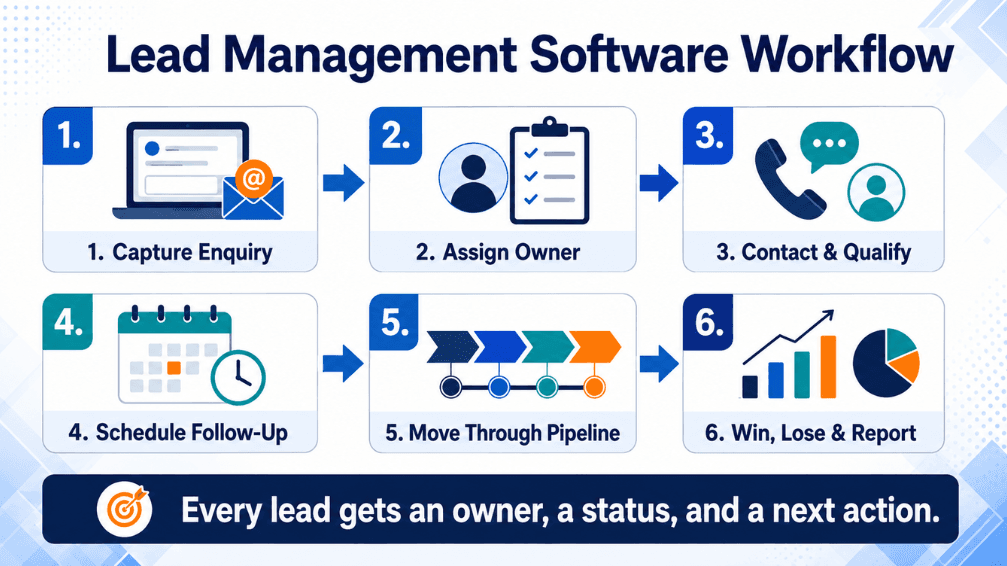
Managers can see activity and progress, while employees receive a prioritized list instead of searching through messages. Lead capture, assignment, reminders, and reporting can also become part of a wider business automation software solution in Nepal.
Key Benefits of Lead Management Software
The main benefit is consistent follow-up. Reminders reduce dependence on memory, while ownership rules make responsibility clear. Faster responses also create a better first impression.
A central history improves teamwork. If an employee is absent or a lead changes owner, the next person can review previous discussions. Managers do not need to collect updates manually. Other benefits include:
- Fewer missed or duplicated enquiries
- Clear sales stages
- Better lead prioritization
- More accurate conversion reports
- Visibility into team workload
- Easier measurement of marketing sources
- Better forecasting
- A consistent customer experiences
Lead follow-up software also reveals problems. Leads may reach proposal but fail to close, or one source may produce volume but few qualified buyers. Managers can then improve conversations, offers, response time, and marketing spending.
Essential Features to Look For
The best platform is one employee use consistently and managers can turn into decisions. Begin by mapping the lead journey and identifying where information is lost. Look for these essential capabilities:
- Quick manual entry and web-form capture
- Custom fields for business-specific information
- Flexible lead assignment
- Clear pipeline stages
- Follow-up dates, tasks, and reminders
- Notes and complete activity history
- Search, filters, and duplicate detection
- Role-based permissions
- Source and campaign reporting
- Mobile-friendly access
- Data export and backups
- Integration options
For sales pipeline software in Nepal, confirm that stages match the actual process. Different industries qualify and close leads differently, so the system should adapt without becoming complicated.
Lead Management Software vs CRM
Lead management software focuses on potential customers and the steps required to convert them. Customer relationship management or CRM normally encompasses a much broader scope of activities that may involve leads, customers, quotes, sales, service requests, communication, and account history.
A small organization might start off with a specific lead management tool. For a bigger company that needs to link sales with support and/or service delivery, CRM software from Nepal is more appropriate.
Don’t be misled by names. Instead, assess the workflow, access, reporting capabilities, and user-friendliness of the solution.
Check whether the CRM keeps track of all inquiries, displays the day-to-day activities, highlights the bottlenecks, and provides statistics on converting leads into clients.
How Lead Automation Improves Response Time
Lead automation software eliminates administrative delays. A website query will generate a record, alert a sales person, set a deadline and send reminders. Automation may allocate leads geographically, according to the type of services provided, by the nature of campaigns run or based on workload.
Automation should facilitate human interaction. Issues of complexity, pricing and relationship still call for human judgement. Do not repeat yourself without considering the response from the client.
Begin with basic lead generation, ownership, reminders and overdue notifications and then move to lead scoring. Analyze every rule to determine its importance to clients and worker.
How to Implement Lead Management Successfully
- Define a lead clearly. Decide which enquiries enter the pipeline, what information is required, who assigns them, and when an opportunity is lost. Use simple sales stages.
- Clean data before importing it. Remove duplicates, standardize phone numbers, and separate active opportunities from old contacts.
- Train the team with real examples. Managers should use dashboard data in sales discussions; otherwise, employees may return to private sheets.
- After launch, measure response time, overdue follow-ups, conversion, time in each stage, sources, lost reasons, and records with a next action. Improve the workflow gradually.
Businesses generating enquiries through search should connect their lead system with a clear SEO strategy for businesses in Nepal so they can measure which organic visitors become qualified leads and customers.
Conclusion
Lead management software enables companies to convert random inquiries into a standardized sales process. They consolidate information, assign accountability, facilitate prompt follow-up, and reveal to management where the opportunities lie or are getting stalled.
A good lead management system becomes essential for those businesses who have spent on building their websites, SEO, advertising, and sales team. Select a system which is easy, secure, works with your workflow, and generates helpful reports. With proper stage management, clean data, training, and regular use of the system, lead management software in Nepal can minimize lost opportunities and make inquiries successful. If your team is losing enquiries across spreadsheets, phones, and chat messages, discuss your lead management requirements with Infobytes Nepal to identify a practical solution for your workflow.
Frequently Asked Questions
Which businesses need lead management software?
Any company that receives enquiries on a consistent basis can make use of it, such as those in software development, educational consultancy, real estate, health care, agencies, distribution, training institutes, and professional services.
Can leads from a website be added automatically?
Yes. Assuming that integration is possible, a form on the website would be able to generate leads, identify their sources, assign them to someone, and initiate a reminder or task.
Is a spreadsheet enough for lead tracking?
A spreadsheet may be enough when there are only a few users and a limited number of enquiries. However, it becomes risky when several employees need reminders, access controls, communication history, lead assignments, and real-time reporting.
How can a business measure lead management performance?
Response time, number of overdue tasks, quality lead ratio, conversion ratio, average time in each stage, performance by sources, lost leads reason, and next action on all active leads.

Written by
Kritika Ghimire
SEO & Digital Marketing Intern
Kritika works on search visibility and the content behind it, and writes about what actually moves a page up the results for a business in Nepal.
More about Kritika